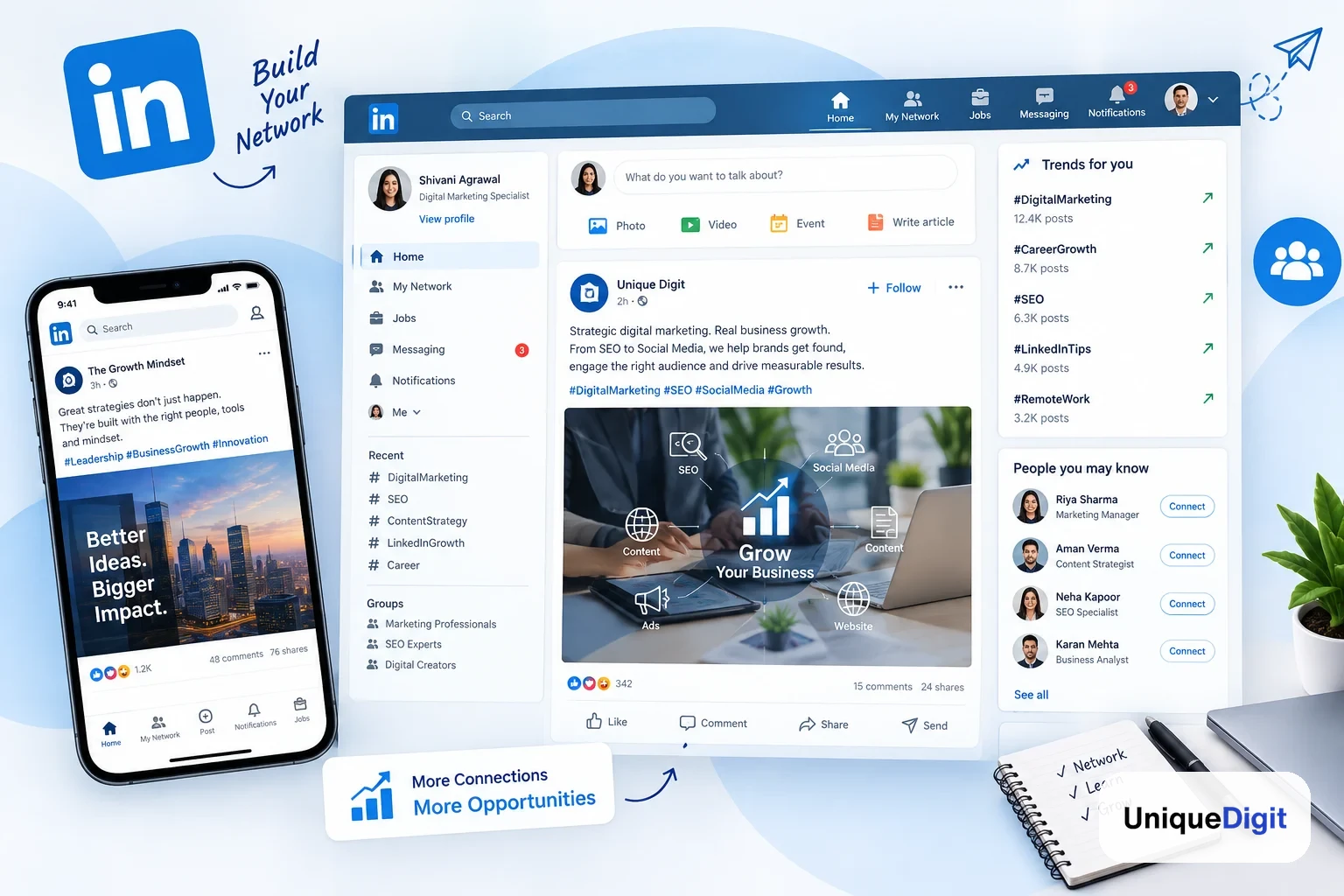
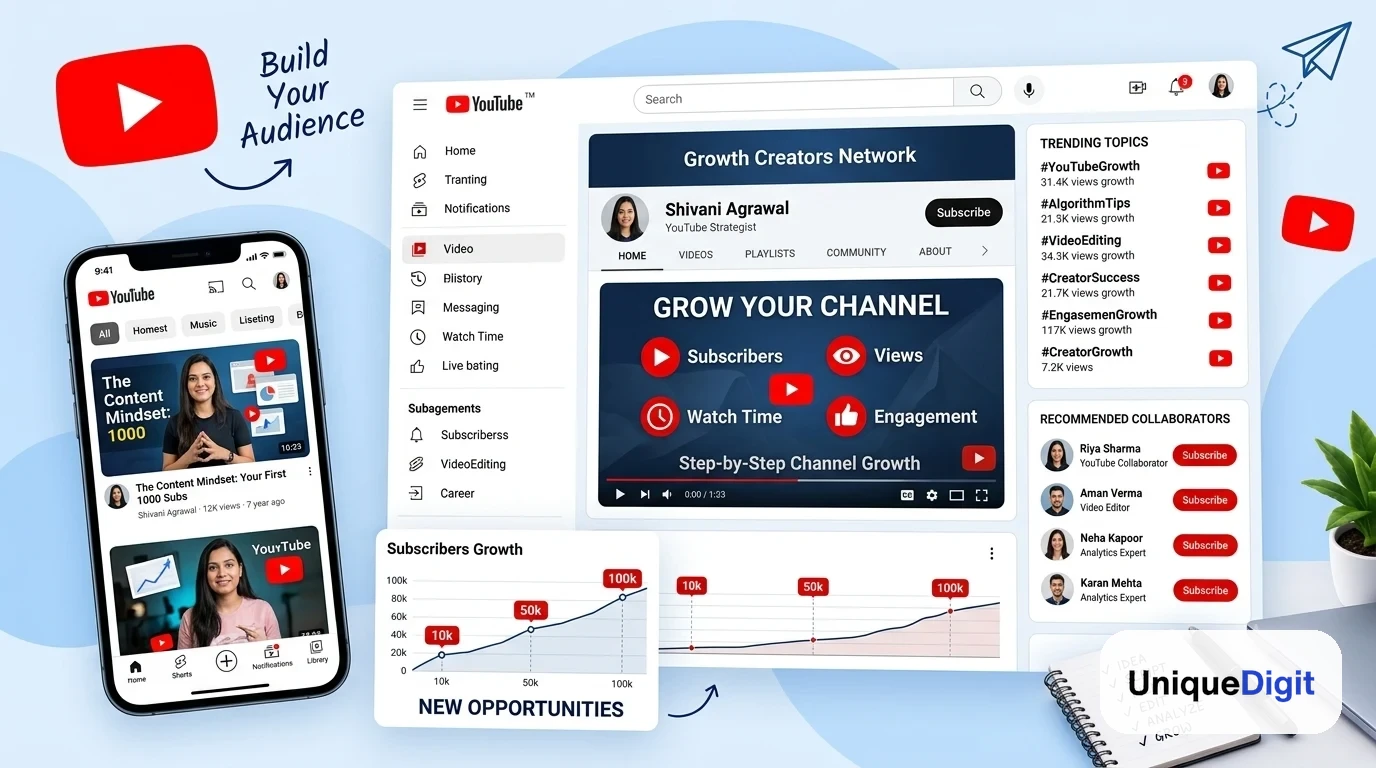




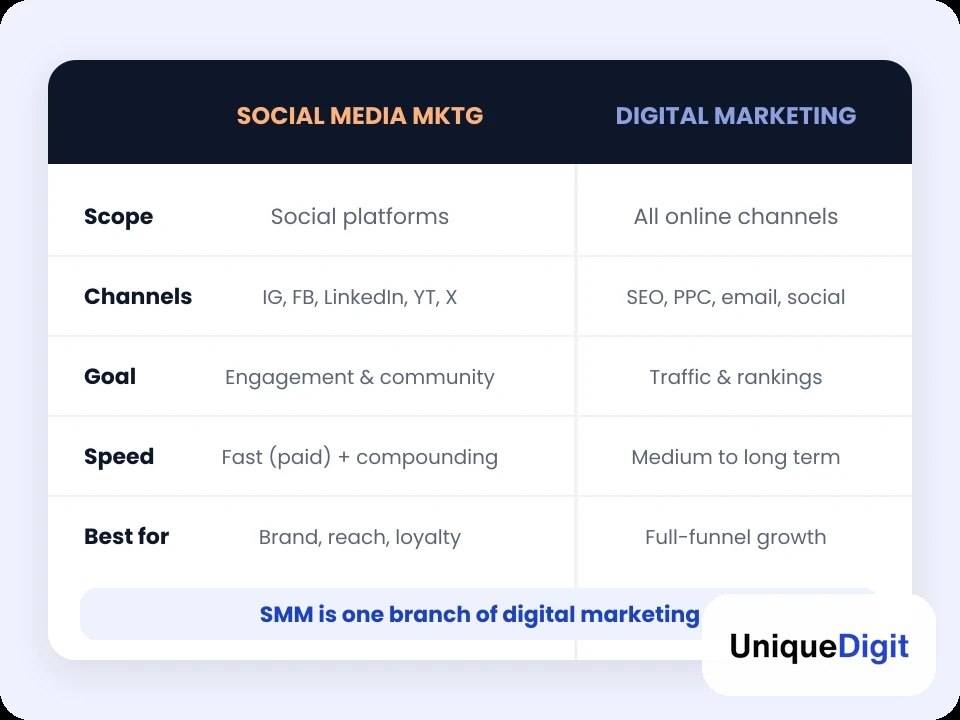
What is social media marketing (SMM)?
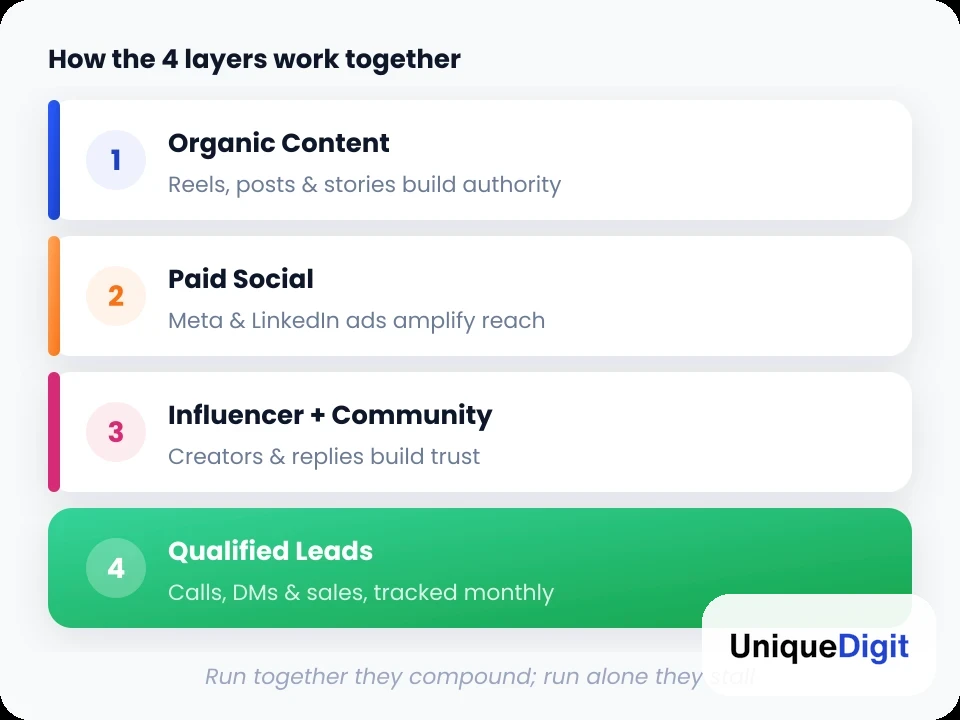
Social media marketing (SMM) is the practice of creating and publishing content on platforms like Instagram, Facebook, LinkedIn, YouTube and X to build brand awareness, grow an engaged audience, and turn that attention into leads and sales. It combines four moving parts, organic content that builds authority, paid social that amplifies reach, influencer partnerships that borrow trust, and community management that converts, into one system that meets your customers where they already spend their time, rather than a one-off burst of advertising.
At its core, social media marketing is about relationships at scale. Every reel watched, comment answered and story viewed is a micro-interaction that, repeated consistently, builds familiarity and trust. When a customer finally needs what you sell, the brand that has been quietly showing up in their feed for months is the one they already feel they know, and familiarity is what converts. This is why SMM is fundamentally different from a burst of advertising: it is a compounding relationship-building engine, not a one-time spend.
For Indian businesses in particular, social media has become the default discovery layer. A prospective customer sees a reel, checks the comments to validate the claims, glances at the follower count and recent reviews to judge credibility, and only then decides whether to visit, call or buy. If your brand is absent or inactive at any of those checkpoints, you lose the sale before a conversation ever starts, often to a competitor whose content simply looked more alive.
It also helps to be precise about what social media marketing is not. It is not simply boosting the odd post when you remember to, and it is not chasing follower counts for their own sake. Ten thousand engaged, relevant followers who buy are worth far more than a hundred thousand passive ones who never will. Real SMM is the disciplined, measured pursuit of business outcomes: awareness that converts, engagement that builds trust, and content that moves people toward a purchase, using social platforms as the medium.
Understood this way, social media marketing sits at the intersection of creativity and data. The creative side, the reels, the hooks, the storytelling, is what earns attention in a crowded feed. The data side, the analytics, the testing, the optimisation, is what turns that attention into measurable growth. Agencies strong on one but weak on the other consistently disappoint. The whole point of a specialist team is to hold both together, so every creative decision is accountable to a number and every number is served by better creative. It pairs naturally with our content marketing and paid ads work.
Unlike a one-off ad campaign, social media marketing is an always-on channel. The average Indian internet user spends over two hours a day across social apps, so a brand that shows up consistently with useful, native content stays top of mind through the entire buying journey, from first discovery to final purchase and beyond into loyalty and repeat sales.
How does social media marketing work?
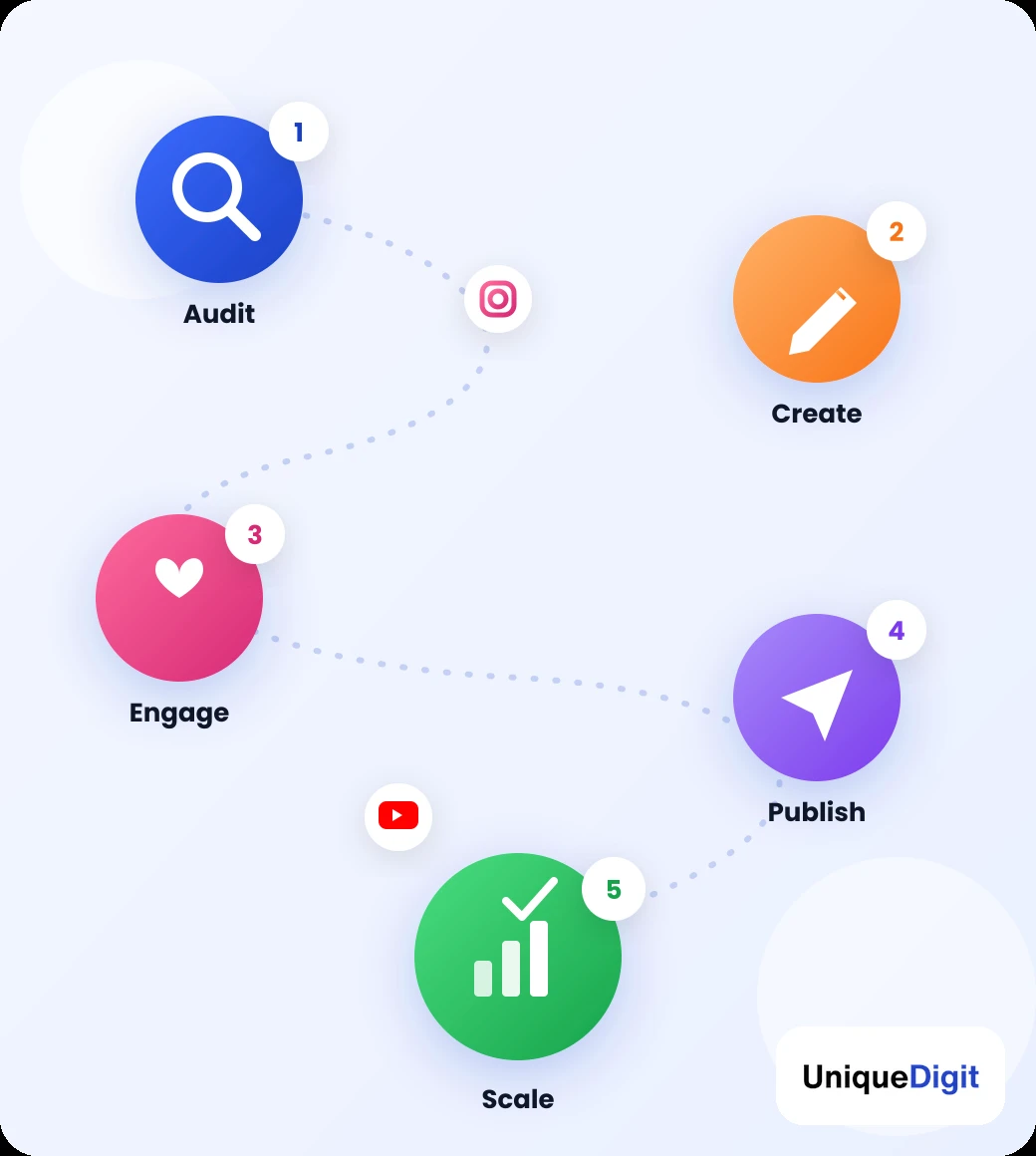
Social media marketing works by moving strangers through a funnel, from awareness to engagement to conversion, using a repeatable ten-step process. Each step builds on the last, which is why brands that treat SMM as a system rather than random posting see compounding returns.
The 10-step process we follow
- Establish goals: define whether the priority is brand awareness, engagement, website traffic or conversions.
- Know the audience: map demographics, interests and buying behaviour into a clear buyer persona.
- Select the right platforms: pick the two or three channels where your buyers actually spend time.
- Craft irresistible content: reels, carousels, stories and videos designed to stop the scroll.
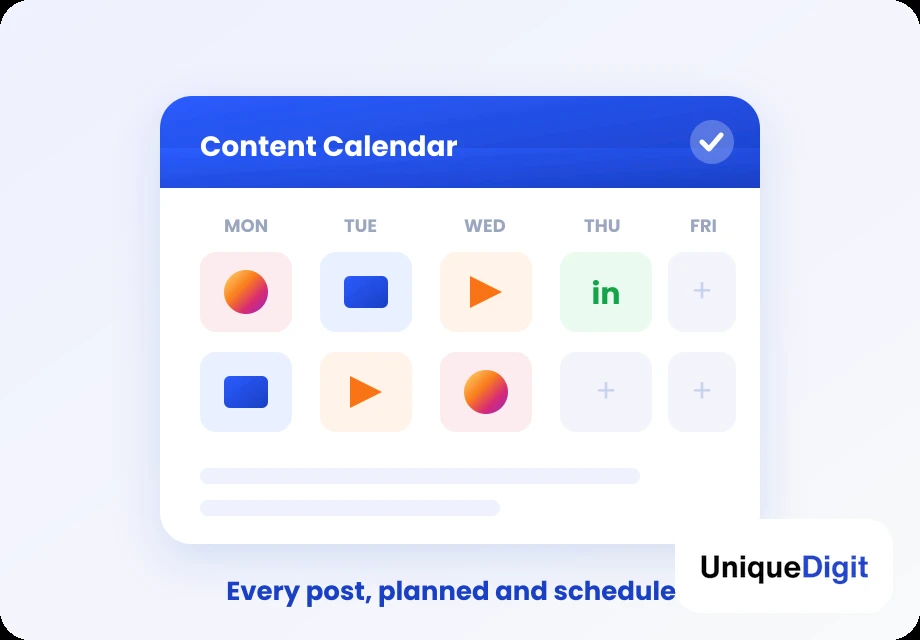
- Plan the calendar: a consistent, organised posting schedule so the brand shows up reliably.
- Harness paid promotion: amplify the best content with Meta, LinkedIn and YouTube ads.
- Foster engagement: reply to comments, messages and mentions to build community.
- Use analytics and optimise: track performance and refine the strategy on real data.
- Collaborate with influencers: partner with creators who share your audience and values.
- Keep up with trends: adapt to new formats and algorithm changes as they happen.
How the funnel actually moves people
In practice, these ten steps map onto a simple funnel. Awareness content, primarily Reels, Shorts and shareable posts, pulls new people in at the top. Consideration content, such as carousels, testimonials, case studies and educational videos, warms them up in the middle. And conversion content, including offers, product spotlights, retargeting ads and clear calls to action, closes them at the bottom. Community management and influencer proof run across all three stages, reinforcing trust at every touchpoint.
The reason a specialist manages this rather than a single in-house generalist is that each stage needs different creative skills, different platforms and different metrics. Awareness is measured in reach and views; consideration in saves, shares and profile visits; conversion in leads, direction requests and sales. Reading those signals correctly, and shifting budget and content toward what is working, is where experience pays for itself.
There is a rhythm to this that only becomes visible over time. In the first month, the priority is establishing a consistent posting cadence and learning what your specific audience responds to. By months two and three, clear content winners emerge and paid budget concentrates behind them. From month four onward, the account has enough data and enough of a content library that growth compounds, reach climbs, engagement deepens and leads become predictable. Understanding this arc is what stops businesses from pulling the plug just before the returns arrive.
What are the benefits of social media marketing?
The main benefits of social media marketing are increased brand exposure, targeted reach, lower cost per acquisition, direct customer engagement, richer data and a global audience. Few marketing channels deliver this combination of scale, precision and two-way connection at the same time.
The benefits that matter most for Indian businesses
- Increased brand exposure: with 470 million-plus social users in India, SMM puts your brand in front of a massive, relevant audience daily.
- Targeted marketing: advanced targeting reaches specific demographics, interests and behaviours so the right people see your message.
- Cost-effective: social advertising is typically cheaper per lead than traditional media, and organic reach costs nothing but effort.
- Engagement and interaction: direct conversations answer questions, resolve issues and build genuine brand loyalty.
- Data and analytics: platform insights let you make data-driven decisions and prove ROI.
- Enhanced lead generation: social content drives traffic to your site and into your lead-generation funnel.
- Builds trust: a consistent, responsive presence with real reviews makes customers trust you before they buy.
The benefit most businesses underestimate
Beyond the obvious wins, the most valuable long-term benefit of social media marketing is that it builds an owned audience. Unlike paid search, where traffic stops the moment your card is declined, an engaged following of 20,000, 50,000 or 100,000 people is an asset you keep. Every future launch, offer or announcement reaches them at zero incremental cost, which steadily drives your blended cost per acquisition down as the audience grows. Over two or three years, this is the difference between renting attention and owning it.
Social media also doubles as the cheapest, fastest customer-research tool a business has. Comments, polls, DMs and engagement patterns reveal exactly what your market cares about, which objections keep coming up, and which messaging lands, insight that would cost lakhs to gather through formal surveys. Smart brands feed that back into product, pricing and positioning decisions, so the returns from SMM extend well beyond marketing.
Finally, social media marketing compounds the value of every other channel you run. The audience you build becomes a warm list for email campaigns and product launches. The content you create feeds your website, your ads and your sales conversations. The reviews and social proof you accumulate lift conversion rates everywhere a prospect encounters your brand. Seen this way, SMM is not a siloed line item but the connective tissue that makes your entire marketing mix work harder, which is exactly why we position it alongside SEO, content and paid search rather than in isolation.
What are the challenges of social media marketing?
The real challenges of social media marketing are that it is time-consuming, exposes you to public criticism, depends on platform algorithms, raises privacy considerations and takes place in a saturated, competitive space. These are exactly the reasons most businesses hand SMM to a specialist rather than doing it in-house.
- Time-consuming: consistent posting, monitoring and responding demands ongoing daily effort.
- Public criticism: negative comments and reviews need calm, professional handling to protect your reputation.
- Platform dependency: algorithm and policy changes can shift your reach overnight, so you can never rely on one channel alone.
- Saturation and competition: standing out among thousands of brands takes genuine creative quality and strategy.
The hidden cost of getting it wrong
The challenges above are not just inconveniences; handled badly, they carry real cost. A single poorly-judged post can spark a public backlash that takes weeks to recover from. An account overly dependent on one platform can lose most of its reach overnight when an algorithm updates. And inconsistent posting trains the algorithm to deprioritise your content, so each restart is harder than the last. These risks are exactly why social media marketing rewards process and experience over enthusiasm alone.
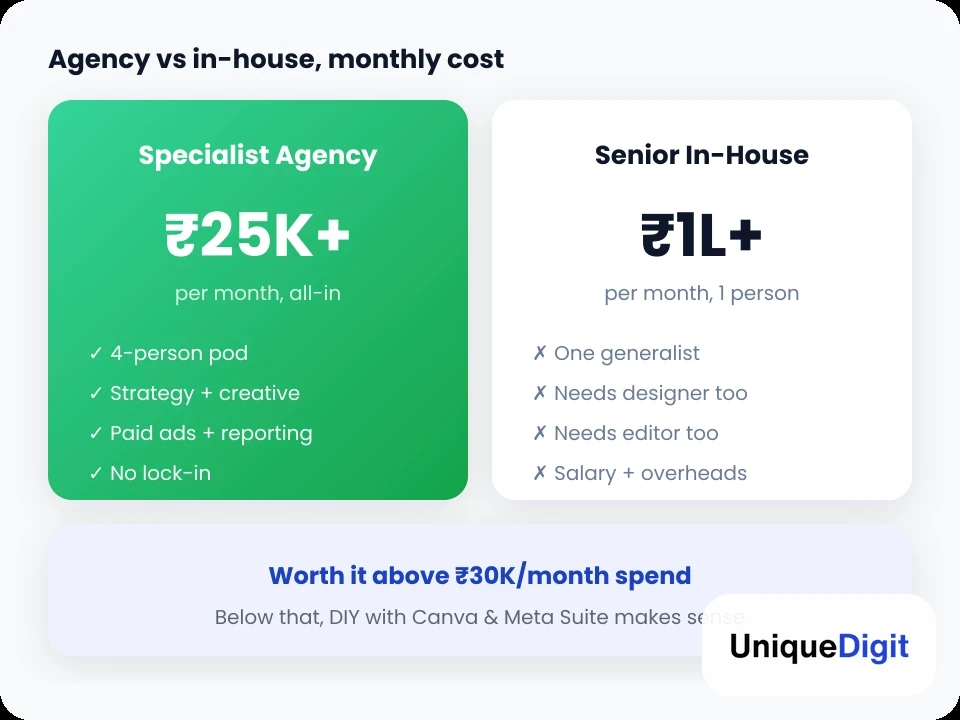
There is also an opportunity cost most owners overlook. Every hour a founder or small team spends wrestling with content calendars, ad managers and comment moderation is an hour not spent on the product, the customers or the parts of the business only they can run. For most businesses past a modest spend threshold, the question is not whether social media marketing is worth doing, but whether doing it in-house is the best use of scarce time and attention.
How do you build a social media marketing strategy?
You build a social media marketing strategy by aligning goals with business objectives, understanding your audience, researching competitors, auditing existing accounts, choosing platforms, defining a brand voice and committing to a content calendar you measure and refine. A strategy is what separates social media marketing that grows revenue from social media that just fills a feed.
The building blocks of a winning strategy
- SMART goals: specific, measurable, achievable, relevant and time-bound objectives tied to the business.
- Audience research: a detailed buyer persona covering age, location, interests and pain points.
- Competitor analysis: study rivals' content, cadence and engagement to find gaps you can own.
- Social media audit: assess what is working, what is not and where the fastest wins are.
- Brand voice: a consistent tone and visual identity so your audience recognises you instantly.
- Content calendar: a planned mix of formats posted at the times your audience is most active.
- Measurement: track reach, engagement, leads and conversions, then optimise every month.
Why most DIY strategies quietly fail
The strategies that fail are rarely the ones with bad ideas; they are the ones without consistency and measurement. A business posts enthusiastically for three weeks, sees little immediate return, gets busy, and the account goes quiet. Because social media rewards momentum, that stop-start pattern resets the algorithm's trust each time, and growth never compounds. A documented strategy with a content calendar and a person accountable to it is what turns sporadic effort into a reliable growth curve.
Equally important is matching the strategy to the buying cycle. A restaurant needs frequent, appetite-driving visual content because the decision is fast and emotional. A B2B software firm needs slower, authority-building thought leadership because the decision takes months and involves several stakeholders. A single template applied to both would underperform for each, which is why we build every strategy around the specific way your customers actually decide.
A strong strategy also builds in flexibility. Social platforms change constantly, a new format launches, an algorithm update reshuffles reach, a trend suddenly dominates, and a rigid annual plan cannot keep up. We treat the strategy as a living document: the goals and brand voice stay stable, but the tactics, formats and channel mix are reviewed and adjusted every month against real performance data. That balance of consistency in direction and agility in execution is what keeps a programme improving rather than plateauing.
Which are the best platforms for social media marketing?
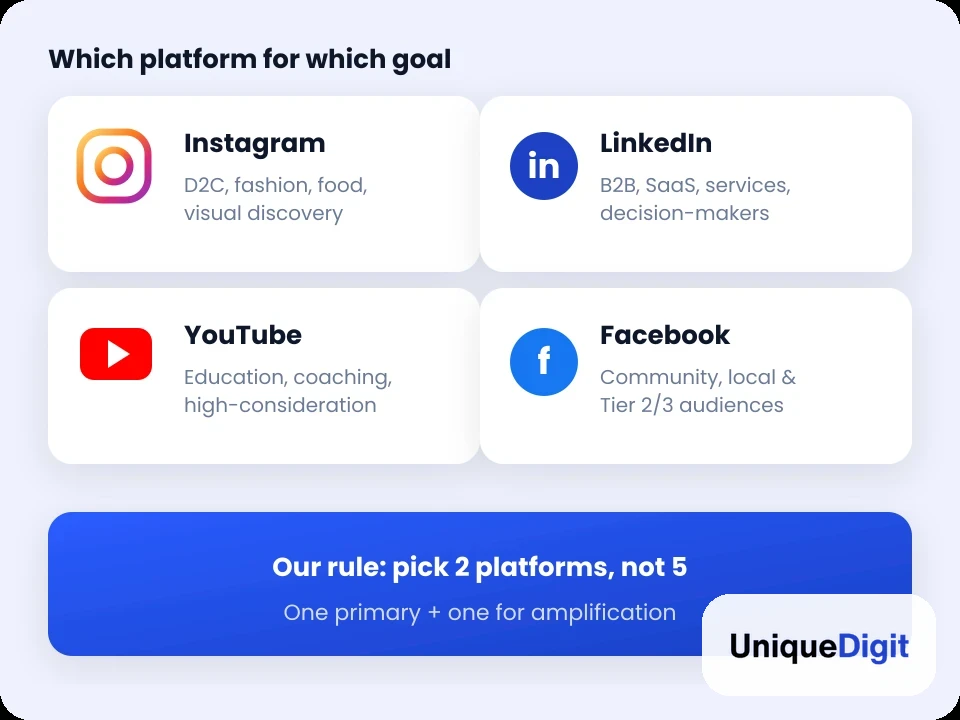
The best social media platform depends on your audience: Instagram and YouTube for consumer and D2C brands, LinkedIn for B2B, Facebook for community and Tier 2/3 reach, and X for real-time and tech audiences. There is no single best platform, only the best two or three for your specific buyers.
Platform-by-platform, at a glance
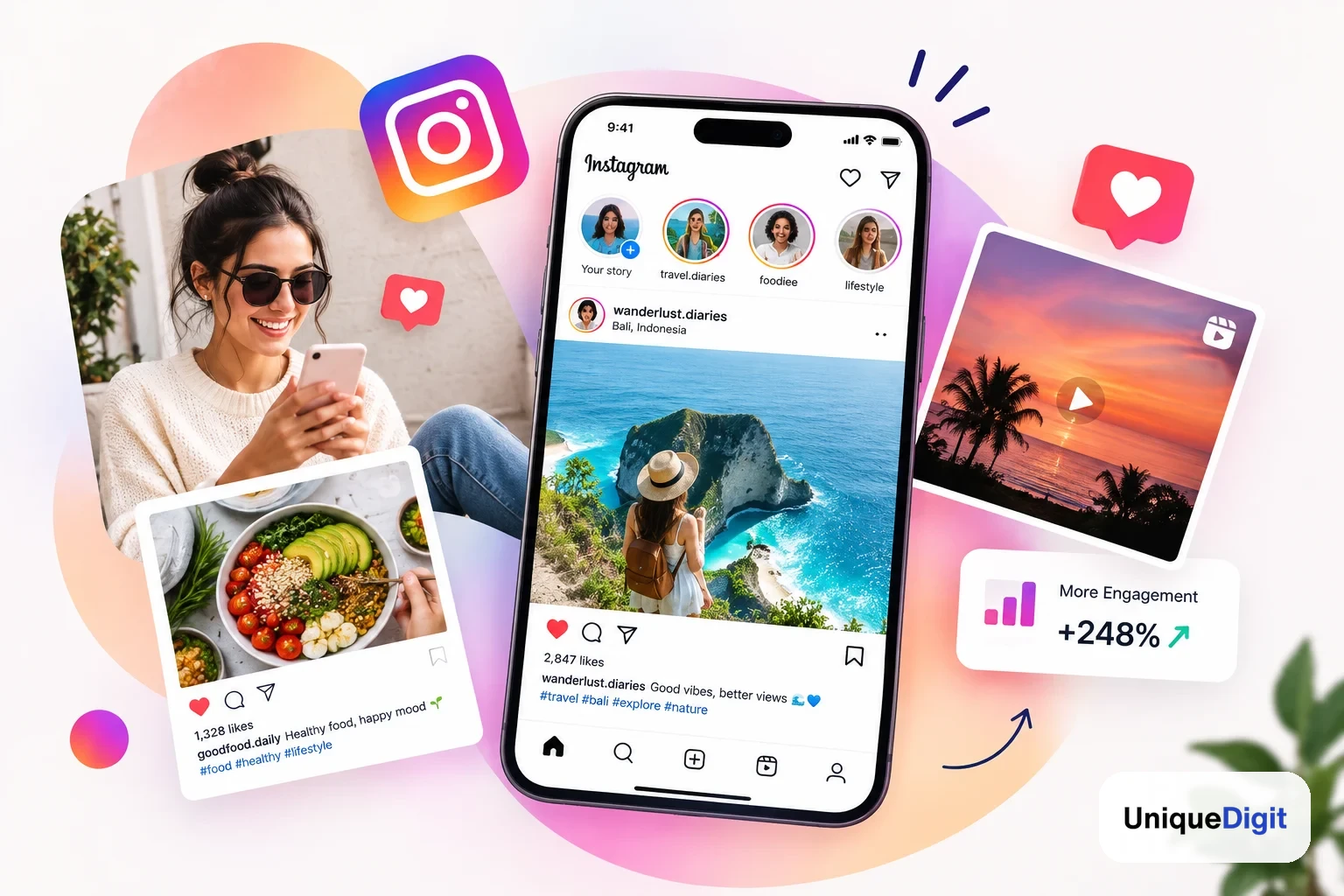
- Instagram: 470 million-plus Indian users, best for visual discovery, Reels and D2C brand awareness.
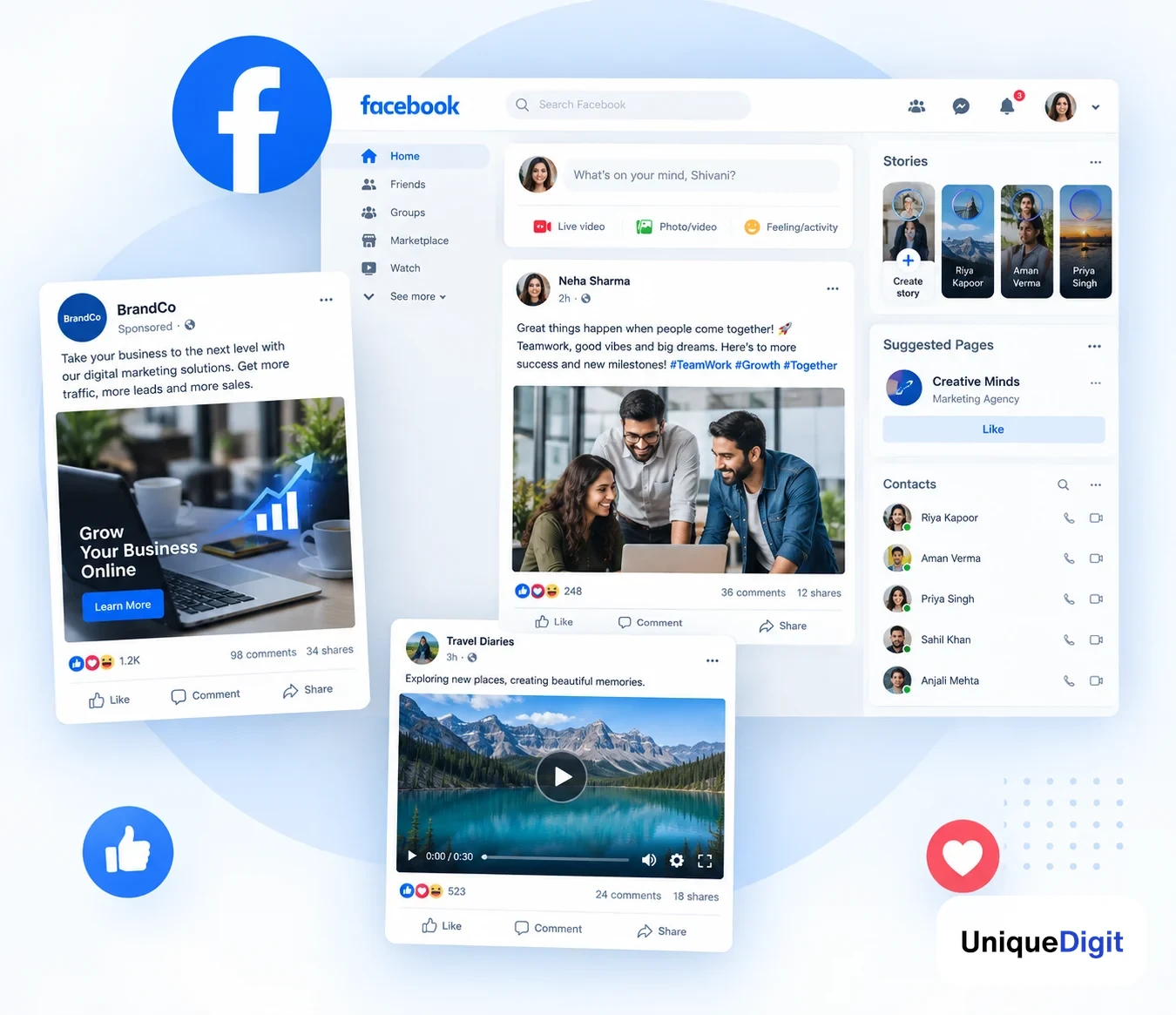
- Facebook: the largest platform overall, strong for paid advertising, community and Tier 2/3 audiences.
- LinkedIn: the B2B powerhouse for thought leadership, lead generation and reaching decision-makers.
- YouTube: long-form and Shorts, unbeatable for education, coaching and high-consideration purchases.
- X (Twitter): real-time engagement, customer service and tech or media audiences.
How to choose without spreading too thin
The most common and most expensive mistake is trying to be active everywhere at once. A limited team spread across five platforms produces mediocre content on all of them; the same team focused on two produces category-defining content where it counts. Our rule is simple: choose one primary platform where the bulk of your buyers live, one secondary platform for amplification, and ignore the rest until your scale genuinely justifies expansion.
Platform choice also shifts with your goal. If you are chasing fast conversions for a consumer product, Instagram plus Meta ads is usually the strongest starting pair. If you are building a B2B pipeline, LinkedIn plus targeted content is the engine. If education and trust drive your sales, YouTube compounds better than anything else. We map that decision during onboarding using your audience data, not guesswork, so your budget concentrates exactly where it will return the most.
Timing and format nuances matter just as much as platform choice. Indian audiences engage heavily in the evenings and late nights, festival calendars create predictable spikes in attention and spending, and mobile-first, sound-on vertical video is now the default way content is consumed. A strategy that ignores these realities, posting at the wrong hours, in the wrong format, in the wrong language, can underperform even with excellent creative. Getting the fundamentals of when, how and in what language you show up right is often the difference between a post that quietly disappears and one that reaches lakhs.
How much does social media marketing cost in India?
Social media marketing in India typically costs between Rs. 20,000 and Rs. 3 lakh per month, with most small and mid-sized businesses landing in the Rs. 25,000 to Rs. 80,000 range depending on platforms, content volume and paid ad budget. Pricing scales with scope, not with a fixed number, because a single-platform organic plan and a multi-platform programme with paid ads and influencers are very different amounts of work.
What actually drives the cost
- Number of platforms: one channel costs far less than four run properly and natively.
- Content volume and format: video and reels cost more to produce than static posts, but convert better.
- Paid ad budget: billed separately and directly to your own accounts, with no markup from us.
- Influencer and community scope: creator partnerships and daily management add cost but compound trust.
It is worth being clear about what cheap really costs. Agencies quoting far below market usually cut the parts you cannot see: they set up a profile once and then coast, skip community management, recycle generic templates, or quietly add margin on top of your ad spend. The result looks active for a month and then stalls. Genuine social media marketing, produced natively and maintained consistently, costs roughly the same to do properly whether you are a Tier 1 metro brand or a Tier 3 local business, because the work involved is the same; what changes is competition and volume, which is why we scope each engagement individually rather than quoting a flat rate.
How do you measure social media marketing ROI?
You measure social media marketing ROI by tracking metrics that map to business outcomes, reach and follower growth at the top, engagement rate and profile visits in the middle, and qualified leads, direction requests and sales at the bottom, then comparing the value generated against total spend. Vanity metrics like raw likes matter only if they ladder up to those business results.
The metrics we report every month
- Reach and impressions: how many people saw your content, and how that trend is moving.
- Engagement rate: the share of viewers who liked, saved, shared or commented, the clearest signal of resonance.
- Follower growth: the pace at which your owned audience is compounding.
- Website traffic and clicks: how much qualified traffic social is sending to your site.
- Leads and conversions: the enquiries, calls and sales attributable to social, the number that ultimately matters.
Because we bill ad spend directly to your own accounts with zero markup, you always see the true cost per acquired lead or customer, not a figure inflated by hidden agency margin. That transparency is what lets you judge ROI honestly and decide with confidence where to invest next.
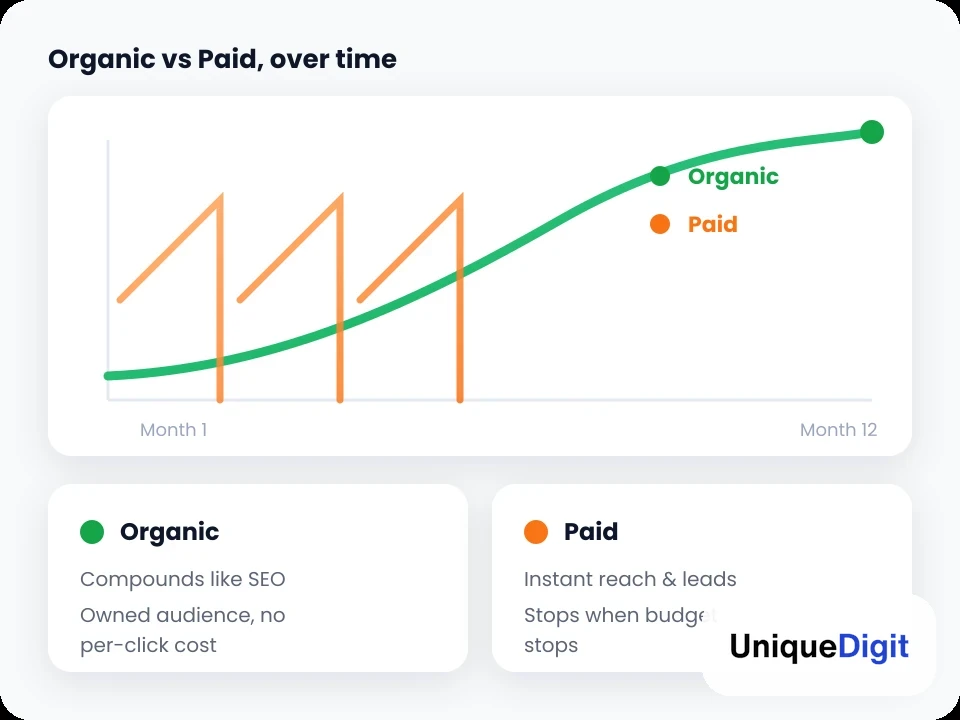
One caveat worth setting upfront: social media ROI is rarely instant and rarely linear. Paid campaigns can show returns within days, but the compounding organic engine, the followers, the content library, the trust, builds over months and then accelerates. Judging social media on its first thirty days is like judging SEO on its first thirty days: you measure the leading indicators early (reach, engagement, saves) and expect the lagging indicators (leads, sales, retention) to follow as the foundation matures. Brands that understand this and stay the course are the ones that eventually pull far ahead of competitors who quit at month two.
What are the latest social media marketing trends in India?
The biggest social media marketing trends in India right now are short-form video, AI-assisted content production, creator and influencer partnerships, social commerce, and AI-search visibility. Brands that lean into these trends early capture reach and trust that late movers spend far more to win back.
- Short-form video first: Reels, Shorts and vertical video dominate discovery across every platform and audience.
- AI in social media marketing: AI now handles caption variations, scheduling, audience segmentation and creative testing at scale, so teams ship more, faster, while humans keep creative direction.
- Creator-led trust: nano and micro-influencers deliver the strongest ROI for Indian D2C brands through authentic, relatable content.
- Social commerce: Instagram Shopping and in-app checkout shorten the path from discovery to purchase.
- AI and answer-engine visibility: structured, genuinely useful content is increasingly surfaced by AI Overviews and assistants, so social content now feeds discovery well beyond the platforms themselves.
The pace of change is also why an in-house generalist struggles to keep up. Platform algorithms, ad formats and creative trends shift monthly, and staying current is effectively a full-time job on top of actually producing content. A specialist agency absorbs that learning cost across many accounts, so your brand benefits from patterns we see working elsewhere without paying to discover them the hard way. When a new format or feature starts outperforming, you are among the first to use it, not the last.
Is social media marketing worth it for small businesses?
Yes, social media marketing is one of the most cost-effective growth channels available to a small business in India, because it levels the playing field: a small, well-run brand can out-engage a larger, complacent competitor without matching its ad budget. Social rewards relevance and consistency, not just spend, which is exactly where a focused small business can win.
For a local clinic, boutique, restaurant, coaching centre or D2C label, social media is often the single highest-return channel, because it reaches nearby, high-intent customers at the moment they are deciding where to spend. A steady stream of genuine reviews, relatable reels and responsive replies builds the local reputation that drives walk-ins, calls and orders, frequently at a lower cost per customer than traditional advertising ever delivered.
The other reason SMM suits small businesses is speed of feedback. Unlike a billboard or a print ad, where you spend and hope, social media tells you within days what is landing. A reel that takes off signals a message worth doubling down on; a post that flops costs almost nothing and teaches you something. That fast, cheap learning loop lets a small business punch far above its weight, testing ideas, finding its voice and scaling what works, without the large upfront commitments traditional advertising demands.
Which industries benefit most from social media marketing?
Every industry with a physical location, a visual product or a considered purchase benefits from social media marketing, but the highest returns come from D2C and e-commerce, education, healthcare, real estate, hospitality and B2B services. Each vertical needs a different playbook, which is why we run industry-specific pods rather than one generic template.
How the approach shifts by industry
- D2C and e-commerce: Instagram-first reels and shopping, plus influencer partnerships that drive direct sales.
- Education and coaching: YouTube and Reels that turn free value into admission enquiries.
- Healthcare and clinics: trust-building, compliance-aware content that reassures patients before they book.
- Real estate: video walkthroughs and configuration-level paid social that generate qualified site visits.
- Hospitality and restaurants: appetite-driving reels and local campaigns that fill tables and rooms.
- B2B and SaaS: LinkedIn thought leadership and founder branding that shorten long sales cycles.
Whatever the sector, the underlying principle holds: match the content, platform and cadence to the way your specific customers actually discover and decide, and social media becomes a predictable source of growth rather than a cost centre.
Businesses that think they are "not visual enough" for social media are usually mistaken. Every business has stories worth telling, the people behind it, the problems it solves, the customers it has helped, the process that makes it different. A manufacturer, a law firm, a logistics company or a financial advisor can all build a compelling, trust-driven presence; it simply takes the right format and framing. Part of our job is finding the angle that makes even a "boring" industry genuinely engaging on social.
What is Unique Digit? India's trusted social media marketing company
Unique Digit is a social media marketing company serving businesses across India in 20+ cities, built on senior ownership rather than a rotating junior team. We run organic content, paid social, influencer marketing and community management under one roof, backed by social media marketing work across 200+ Indian brands managing 12M+ monthly reach.
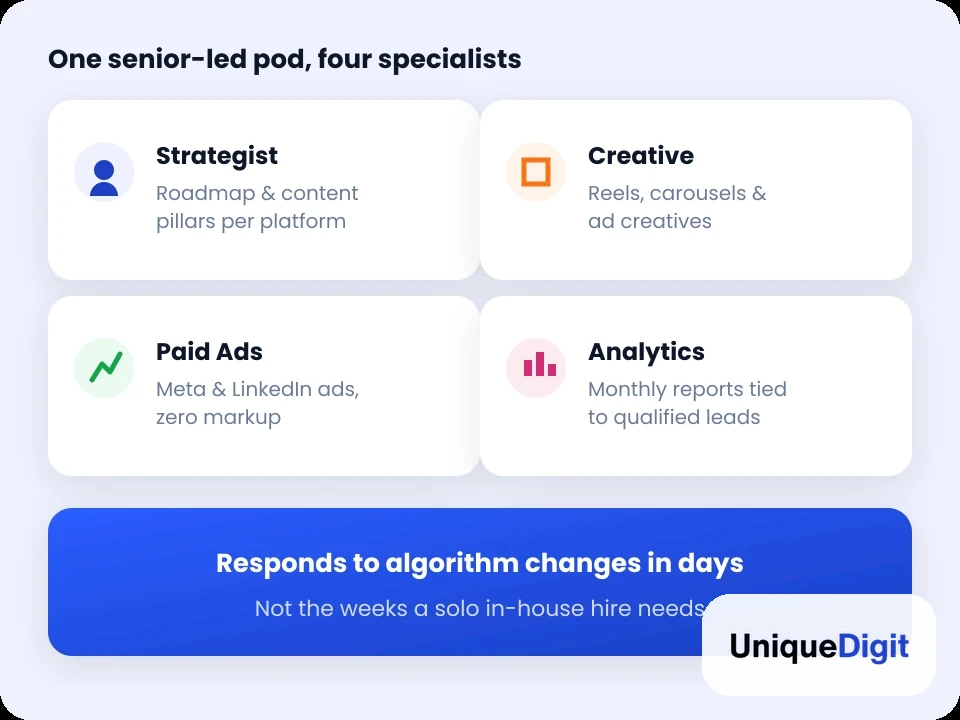
We are not a one-person outfit running everything off a laptop. Every account gets a senior social media strategist plus specialists in creative, paid social, influencer outreach and analytics, so campaigns move fast without cutting corners. The senior who audits your account and pitches you is the same senior who runs it, not a salesperson who disappears once the contract is signed.
That structure matters more than it sounds. Social media marketing touches half a dozen disciplines at once, creative, copywriting, paid media, community, influencer outreach and analytics, and agencies that hand your account to a single generalist inevitably do some parts well and neglect the rest. By pairing a senior lead who owns your strategy with specialists who each go deep on their part, we avoid the jack-of-all-trades problem that quietly stalls most social media campaigns after the first month.
Continuity compounds the advantage. Because the same senior lead stays with your account, they build a deep understanding of your brand, market and what has and has not worked, knowledge a rotating team constantly has to relearn. Over months and years, that accumulated context lets us make sharper calls faster, spot opportunities a newcomer would miss, and adapt your strategy as the business grows rather than restarting from scratch each time the account changes hands.
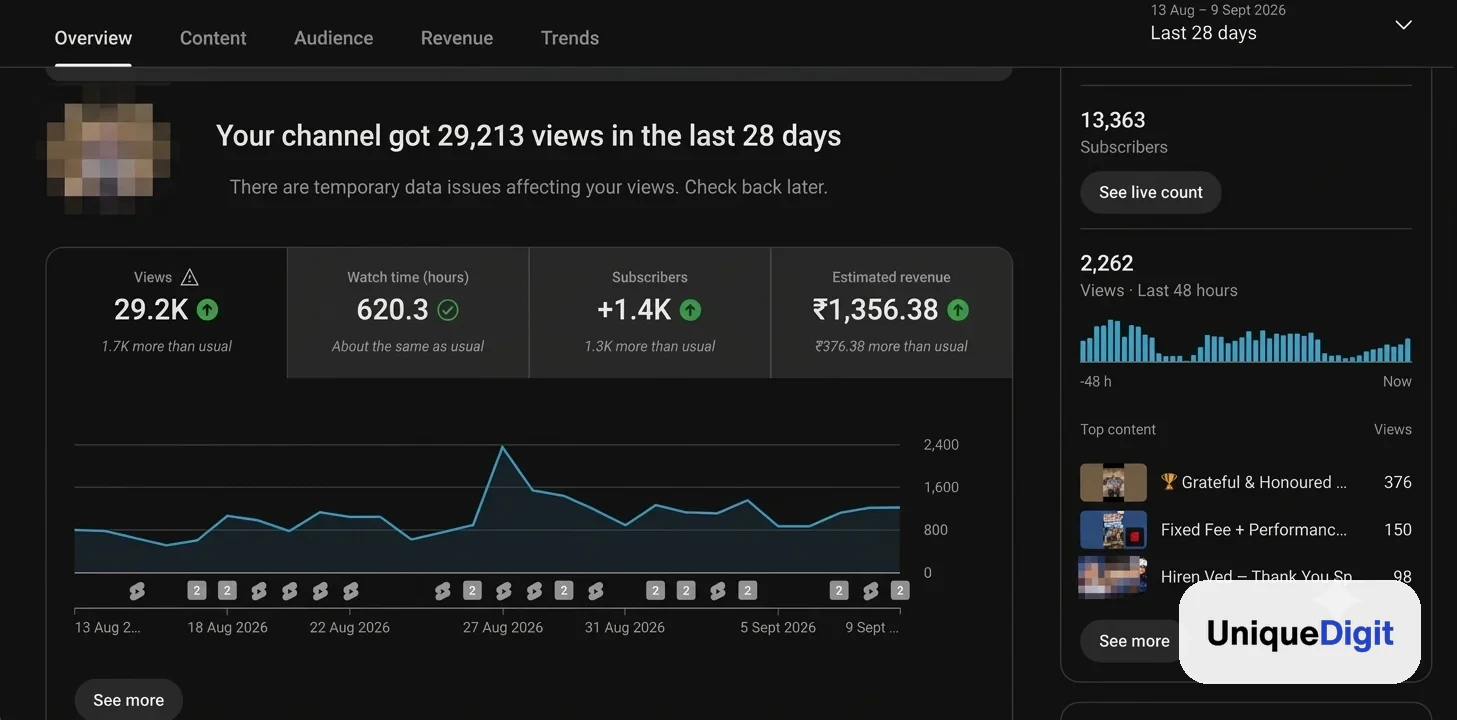
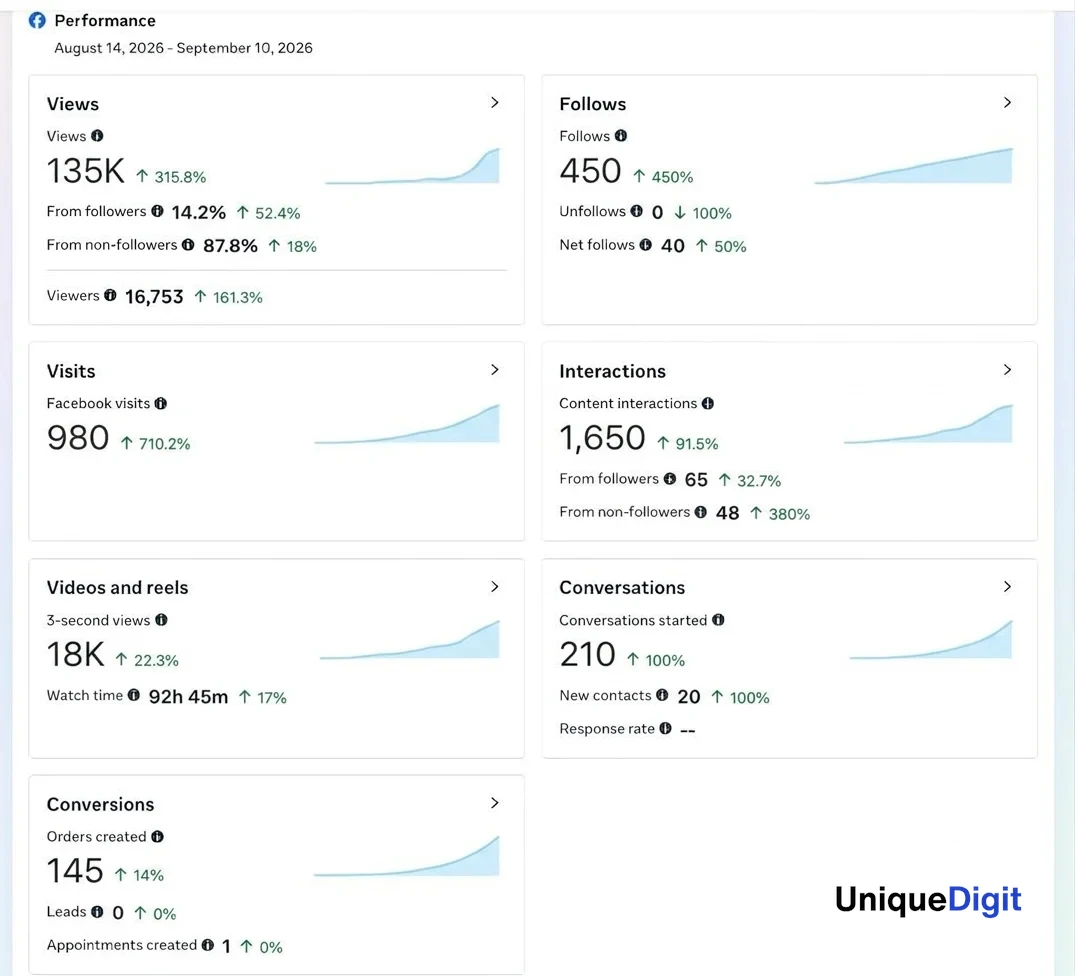
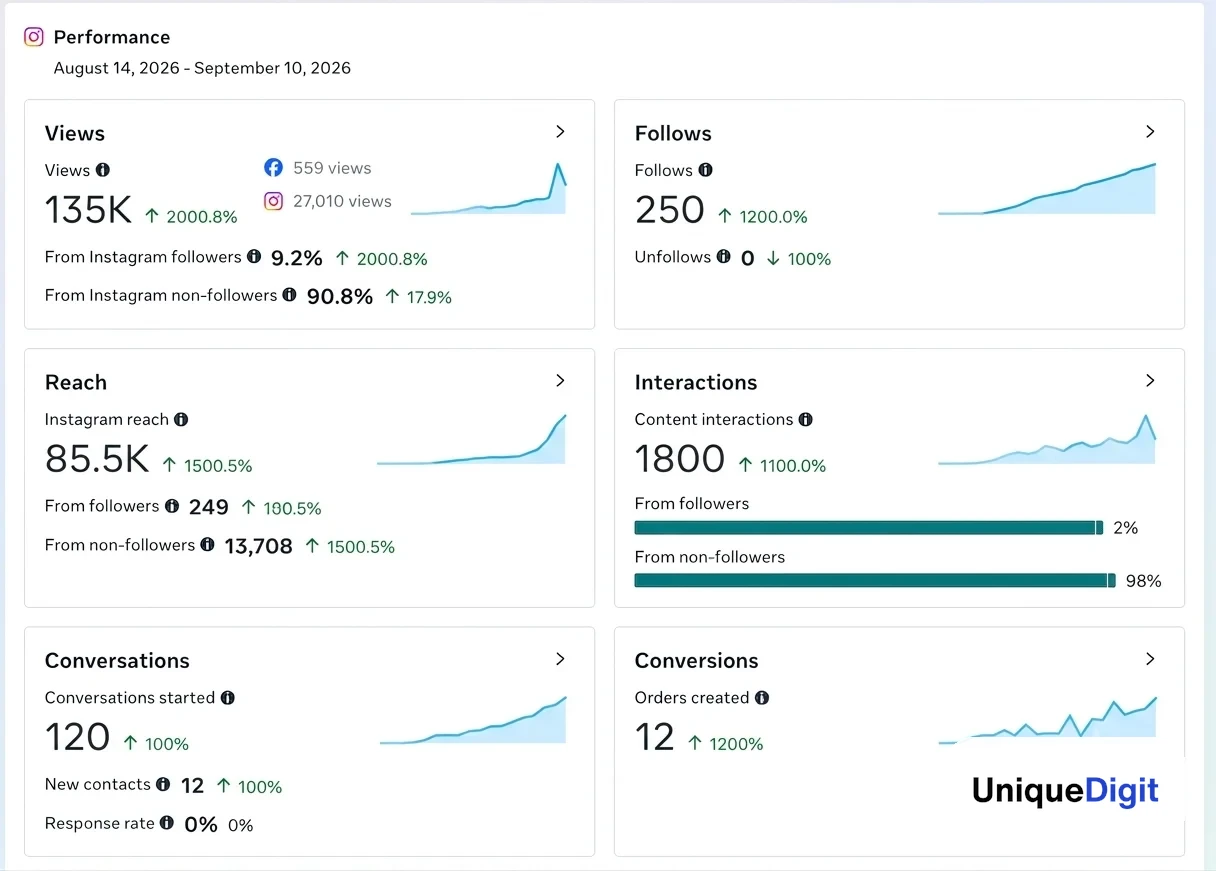
We also built the agency around transparency because social media marketing has a trust problem. Results take time to show, and metrics are easy for a non-specialist to misread, which has let too many agencies charge for activity while delivering little. Our answer is simple: you get direct visibility into the same dashboards we use, from Meta Business Suite to Instagram Insights to YouTube Studio, so you can see for yourself whether reach, engagement and leads are genuinely climbing. When the numbers are in front of you, there is nowhere for underperformance to hide, and that accountability keeps us sharp.
Why choose Unique Digit for social media marketing?
Choose Unique Digit for social media marketing because we combine senior ownership, platform-native creative, zero markup on ad spend and revenue-connected reporting, with no long lock-in. Our approach is designed to turn social from a brand-awareness expense into a measurable acquisition channel.
- Senior strategist on every account, not a junior handover after the sales call.
- Zero markup on ad spend, billed directly to your own Meta, LinkedIn and YouTube accounts.
- Transparent monthly reporting on reach, engagement and qualified leads, not vanity metrics.
- Month-to-month contracts, because we earn the renewal through results, which is why 91% of clients stay past year one.
Beyond the differentiators above, what clients tell us matters most is accountability. We do not hide behind impressions and reach when the real question is whether social is generating enquiries and sales. Every monthly report ties activity back to business outcomes, and every quarter we sit down to review what worked, what did not and where the next quarter's budget should go. That level of ownership is rare in an industry where too many agencies coast once the contract is signed.
It comes down to a straightforward promise: we treat your social media the way we would treat our own brand. That means honest advice about what is realistic for your category and budget, creative we are proud to put our name to, spend deployed where it genuinely returns, and reporting that hides nothing. Whether you are a startup finding your first audience or an established brand scaling a proven one, the goal is the same, to turn social media from a cost you tolerate into an asset that reliably brings in customers.
Ultimately, social media is where Indian buyers now discover and decide, and choosing the right partner to navigate it is one of the highest-leverage decisions a business can make. If you want a social media marketing agency that shows you the numbers, tells you the truth about what is realistic and treats your growth as seriously as you do, start with a free social media audit and decide from there.